If your pool pump is making strange noises, leaking water, or has finally given up after years of faithful service, you're probably feeling a mix of frustration and uncertainty. Replacing an inground pool pump isn't something most homeowners do often—maybe once every 8-10 years—so it's natural to feel overwhelmed by all the technical specifications, horsepower ratings, and installation requirements.
Here's the good news: replacing your pool pump doesn't have to be complicated or stressful. With the right information, you can confidently choose a replacement pump that fits your pool perfectly, saves you money on energy costs, and keeps your water sparkling clean for years to come.
We're going to walk you through everything you need to know—from understanding why your current pump failed to measuring your existing setup, calculating the right specifications, and making the final selection. Think of this as your friendly guide through a process that seems daunting at first but becomes straightforward once you know what to look for.
Signs It's Time to Replace Your Pool Pump
Before we dive into choosing a replacement, let's talk about whether you actually need a new pump or if a repair might suffice. Understanding the difference can save you hundreds of dollars—or prevent you from throwing good money after bad.
When Replacement Makes Sense
The pump is 8+ years old: Even if it's still running, an aging pump is likely costing you significantly in energy bills. Modern pumps are vastly more efficient, and the savings often justify replacement even for a "working" old pump.
Major component failure: If your motor has seized, the shaft is broken, or the housing is cracked, replacement typically costs less than repair—especially when you factor in labor.
Repeated repairs: If you've replaced the motor seal twice in two years or keep fixing different problems, you're dealing with cascading failures. The pump is telling you it's done.
Excessive noise or vibration: Loud grinding, squealing, or wobbling indicates bearing failure or motor problems that will only worsen. These issues often damage other components, making replacement the smarter choice.
Persistent leaking: Small drips from the pump lid O-ring are fixable. But leaks from the pump housing, motor area, or between the motor and pump body usually mean it's replacement time.
When Repair Makes Sense
-
Simple seal replacement on a pump less than 5 years old
-
Capacitor replacement (typical cost: $50-150)
-
Impeller cleaning or replacement
-
Lid O-ring replacement
Pro Tip: If the repair cost exceeds 50% of a new pump's price, replacement is usually the better investment.
Understanding Your Current Pump Setup
Before you can choose the right replacement, you need to gather some critical information about your existing system. This step trips up many pool owners who order a pump based solely on horsepower, only to discover it doesn't fit their plumbing or electrical setup.

Information You'll Need
Pump Horsepower: Look for a metal nameplate on your pump motor. It should list horsepower (HP) along with voltage and amperage. Common ratings for residential inground pools: 0.75 HP, 1 HP, 1.5 HP, 2 HP, or 2.5 HP.
Voltage Requirements: Most inground pool pumps run on 230V (sometimes listed as 220V or 240V), but some older or smaller pumps use 115V. Your replacement must match your existing electrical setup unless you're willing to have an electrician rewire.
Plumbing Connection Size: Measure the diameter of the pipes connecting to your pump. Most inground pools use 1.5-inch or 2-inch PVC plumbing. Your new pump must accommodate these connection sizes.
Flow Rate (GPM): If you know your pump's flow rate in gallons per minute (GPM), write it down. If not, we'll help you calculate what you need in the next section.
Physical Footprint: Measure the mounting base of your current pump and the clearance around it. While most pumps have similar footprints, checking ensures your new pump will fit on the existing pad with room for connections.
Taking Photos for Reference
Before disconnecting anything, take several clear photos of:
-
The entire pump setup from multiple angles
-
The electrical connections and wiring
-
The plumbing connections (inlet and outlet)
-
The nameplate with specifications
-
The pump pad and mounting setup
These photos are invaluable if you need to reference how things were connected, and they're incredibly helpful if you need to ask our customer service team questions about compatibility.
Calculating Your Pool's Requirements
Here's where many pool owners get tripped up: they replace their old 1.5 HP pump with another 1.5 HP pump simply because "that's what we had before." But your previous pump might have been oversized or undersized for your actual needs.
The Pool Volume Calculation
First, you need to know how many gallons your pool holds. If you don't already know this, here's how to calculate it:
Rectangular Pools: Length (ft) × Width (ft) × Average Depth (ft) × 7.5 = Gallons
Oval Pools: Length (ft) × Width (ft) × Average Depth (ft) × 6.7 = Gallons
Kidney/Freeform Pools: This gets trickier. Break the pool into sections (rectangles and circles), calculate each, then add them together. Or check your pool builder's documentation—they should have provided this information.
Average Depth: If your pool has a shallow and deep end, add them together and divide by 2. For example: (3 ft + 8 ft) ÷ 2 = 5.5 ft average depth.
The Turnover Rate Rule
Industry standard requires your pool to complete one full turnover every 8 hours. This means all the water in your pool should pass through the filter system at least three times per day.
Here's the calculation:
-
Pool volume in gallons ÷ 8 hours = Required gallons per hour (GPH)
-
Required GPH ÷ 60 minutes = Required gallons per minute (GPM)
Example:
-
20,000-gallon pool ÷ 8 hours = 2,500 GPH
-
2,500 GPH ÷ 60 minutes = 41.7 GPM
So this pool needs a pump capable of delivering approximately 42 GPM.
Factoring in Head Pressure
Now here's the part that confuses people: your pump doesn't operate in a vacuum. It works against resistance from your plumbing, filter, heater, and any elevation changes. This resistance is called "Total Dynamic Head" or TDH, measured in feet.
Components that add head pressure:
-
Every 10 feet of horizontal pipe run = ~1 foot of head
-
Vertical lift from pool to pump = actual feet of head
-
Each 90-degree elbow = ~1 foot of head
-
Filter resistance = 5-15 feet of head (varies by type)
-
Heater resistance = 3-5 feet of head
The 20-30 Foot Range: Most residential inground pools have a TDH between 20-30 feet. When comparing pump specifications, check the performance curve at this range—that's your flow rate.
Pro Tip: Your pump's rated GPM is at zero head pressure (which never exists in real life). Always look at the pump curve chart to see actual GPM at 25 feet of head.
Single Speed vs. Dual Speed: Making the Choice
This decision significantly impacts both your upfront cost and long-term operating expenses. Let's break down when each option makes sense.
Single Speed Pumps: Simplicity and Value
Best For:
-
Straightforward pool systems without water features
-
Pool owners on tight budgets
-
Pools with simple filtration needs
-
Seasonal pools in colder climates (shorter operating seasons)
The Trade-Offs: Single speed pumps run at one speed (typically 3,450 RPM), meaning they use the same amount of energy whether your pool needs aggressive filtration or gentle overnight circulation. For an average pool, expect annual electricity costs of $500-800.
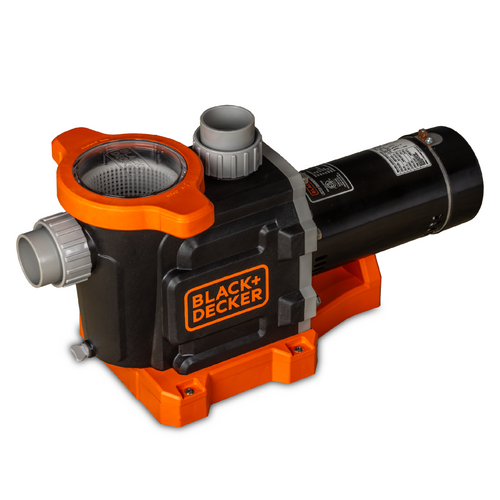
This workhorse pump delivers reliable performance for medium to large inground pools (18,000-30,000 gallons). The dual voltage capability (115V/230V) provides installation flexibility, which is particularly helpful if you're upgrading from an older 115V system but want the option to switch to more efficient 230V operation.
The 1.5 HP motor provides strong circulation and can handle pools with standard water features or solar heating. It's built for durability with corrosion-resistant components and a heavy-duty motor designed for continuous operation during swimming season.
Best for: Pool owners who want dependable, no-frills performance and don't mind slightly higher operating costs in exchange for lower upfront investment.
Dual Speed Pumps: The Sweet Spot

Best For:
-
Pool owners who want significant energy savings without maximum upfront cost
-
Pools used regularly throughout the season
-
Systems with heaters or water features
-
Pool owners willing to use a simple timer
The Advantage: Dual speed pumps offer two speeds: high (3,450 RPM) and low (1,725 RPM). Here's the magic: running on low speed uses approximately 25% of the energy of high speed while still providing adequate filtration for most situations.
Example: Run low speed for 16 hours at the cost of running high speed for 4 hours, giving you better filtration and cleaner water while saving 50-70% on electricity. Annual operating costs typically drop to $200-350.
BLACK+DECKER 1 HP Dual Speed Pump for Inground Pools (220v Only) - $449.99
This pump represents the ideal balance of performance, efficiency, and value. The 1 HP motor is perfectly sized for most residential inground pools (15,000-25,000 gallons), and the dual-speed functionality transforms your operating costs.
Run it on high speed for 2-3 hours daily to handle bather load and debris, then switch to low speed for quiet, efficient overnight circulation. Many pool owners program low speed to run 24/7 during peak summer, using less energy than running a single-speed pump for 8 hours.
The 220V-only specification might seem limiting, but it's actually ideal—230V operation is more efficient and quieter than 115V, and most inground pool electrical systems are already set up for 220V.
Best for: Pool owners looking for maximum long-term value, those with pools near living areas (low speed is whisper-quiet), and anyone tired of high electric bills.
The Payback Calculation
Let's look at real numbers. Assuming your pump runs 8 hours daily for 6 months (180 days) at $0.13/kWh:
1.5 HP Single Speed:
-
Energy use: ~2,000 kWh per season
-
Cost: ~$260 per season
-
Total over 8 years: ~$2,080
1 HP Dual Speed (primarily on low):
-
Energy use: ~800 kWh per season
-
Cost: ~$104 per season
-
Total over 8 years: ~$832
Savings over 8 years: $1,248
The dual speed pump costs $100 more upfront but saves you over $1,200 in operating costs over its lifespan. That's money back in your pocket—or money for pool toys, chemicals, and that new pool float you've been eyeing.
Installation Considerations You Can't Ignore
Even the perfect pump won't perform well if installation isn't done correctly. Here's what you need to know whether you're hiring a pro or tackling this as a DIY project.
When to Hire a Professional
You absolutely need a licensed professional for:
-
Any electrical work if you're not a licensed electrician
-
First-time pump replacements if you're unfamiliar with pool equipment
-
Situations where plumbing modifications are needed
-
Installing a pump with different voltage requirements than your current setup
Typical professional installation cost: $150-400 depending on complexity and location.
DIY Replacement: The Critical Steps
If you're handy and your replacement pump uses the same connections, plumbing, and electrical setup as your old pump, DIY replacement is feasible.
Safety First:
-
Turn off power at the breaker (not just the pump switch)
-
Verify power is off with a voltage tester
-
Close all valves to isolate the pump
-
Release pressure from the filter before disconnecting
Installation Sequence:
-
Drain the pump by opening the drain plug
-
Disconnect the union fittings at inlet and outlet (if present)
-
Carefully label all electrical wires before disconnecting
-
Remove the old pump from the mounting pad
-
Clean the mounting pad and check for levelness
-
Position the new pump, ensuring proper alignment with plumbing
-
Connect plumbing first using new Teflon tape or pipe dope
-
Make electrical connections matching your labeled wires
-
Prime the pump according to manufacturer instructions
-
Open valves slowly and check for leaks
-
Restore power and test operation
The Critical First Run: After starting your new pump, stay with it for 10-15 minutes. Listen for unusual noises, check all connections for leaks, and monitor the pressure gauge. Normal startup takes 30-90 seconds as the pump primes.
Common Installation Mistakes
Not using unions: These allow easy pump removal for future service. If your old setup didn't have them, add them now—your future self will thank you.
Overtightening fittings: PVC can crack. Tighten until snug, then 1/4 to 1/2 turn more. That's it.
Ignoring vibration isolation: Place the pump on a rubber pad or vibration-dampening mount to reduce noise transmission.
Incorrect wire sizing: Your electrical wire gauge must match the pump's amperage draw. Undersized wiring causes voltage drop and potential fire hazards.
Troubleshooting Your New Pump Installation
Sometimes even a correct installation needs adjustment. Here are the most common issues and solutions.
Pump Won't Prime
Symptoms: Pump runs but doesn't pull water, loud cavitation sounds, no flow at returns
Solutions:
-
Check that all valves are fully open
-
Ensure pump lid O-ring is clean and properly seated
-
Verify no air leaks at union connections
-
Fill the pump basket completely with water before starting
-
Check for blockages in the skimmer or pump basket
Pro Tip: Elevation matters. If your pump sits more than 5 feet above water level, it may struggle to prime. Consider installing a check valve or repositioning equipment.
Pressure Too High or Too Low
Symptoms: Filter pressure reads significantly different than your baseline
High Pressure Solutions:
-
Clean or backwash the filter
-
Check for closed or partially closed valves
-
Look for kinked or obstructed return lines
Low Pressure Solutions:
-
Check for air leaks allowing air into the system
-
Verify pump is properly primed
-
Ensure skimmer baskets and pump basket aren't clogged
-
Check that the pump isn't undersized for your system
The Baseline Rule: Note your pressure gauge reading when the filter is clean. This is your baseline. When pressure rises 10 PSI above baseline, it's time to clean or backwash your filter.
Excessive Noise or Vibration
Symptoms: Loud humming, grinding, or vibration that wasn't present initially
Solutions:
-
Verify pump is level on the mounting pad
-
Check that no plumbing is touching structures that amplify vibration
-
Ensure motor mounting bolts are tight (but not overtightened)
-
Confirm pump basket is properly seated and lid is tight
-
Listen for cavitation indicating insufficient water flow to pump
Maintenance Tips for Long Pump Life
Your new pump should last 8-10 years with proper care. Here's how to maximize its lifespan.
Weekly Tasks
-
Empty and clean pump basket
-
Check for leaks around pump lid and unions
-
Verify normal pressure readings
-
Listen for unusual sounds
Monthly Tasks
-
Inspect O-rings for wear or flatness
-
Check for proper water level (skimmers should be 1/2 to 3/4 full)
-
Verify pump is priming quickly on startup
-
Clean skimmer baskets thoroughly
Seasonal Tasks
-
Lubricate motor bearings if specified by manufacturer
-
Inspect electrical connections for corrosion
-
Check pump mounting for stability
-
Clean debris from around pump for proper ventilation
Winterization (Cold Climates)
-
Drain all water from pump housing
-
Remove drain plugs and store separately
-
Remove pump basket and clean thoroughly
-
Consider covering pump with weatherproof cover
-
Leave drain plugs out all winter to prevent trapped water from freezing
Pro Tip: Even in warm climates, if your pump won't run for more than a month, drain it completely. Standing water harbors bacteria and can corrode components.
Making Your Final Decision
Choosing the right replacement pump comes down to balancing your immediate budget with long-term value. Here's our straightforward recommendation framework:
Choose the Single Speed Pump If:
-
Your budget is tight and you need a replacement now
-
You have a seasonal pool that runs less than 4 months per year
-
Your pool is simple with no water features or heater
-
You're planning to upgrade to a variable-speed pump within 2-3 years
The BLACK+DECKER 1.5 HP Single Speed Pump for Inground Pools (Dual Voltage) at $549 provides reliable, straightforward performance with the added flexibility of dual voltage capability.
Choose the Dual Speed Pump If:
-
You want to significantly reduce operating costs
-
Your pool runs 6+ months per year
-
You value quiet operation during evening hours
-
You're willing to invest an extra $100-150 for long-term savings
The BLACK+DECKER 1 HP Dual Speed Pump for Inground Pools (220v Only) at $449.99 offers exceptional value with energy savings that pay back your investment within 2-3 seasons.
Still Not Sure?
Consider your pool usage and priorities:
-
Heavy usage, year-round operation: Dual speed saves you more
-
Evening entertainers: Dual speed's quiet low-speed operation is priceless
-
Occasional pool users: Single speed simplicity may be adequate
-
Growing family: Dual speed accommodates increasing future usage
Your Next Steps to Clean, Clear Water
Replacing your pool pump might feel overwhelming at first, but you now have the knowledge to make an informed decision. You understand what specifications matter, how to calculate your pool's needs, and what to expect during installation.
Remember, the right pump isn't just about horsepower—it's about matching your pool's specific requirements, your usage patterns, and your long-term value expectations.
Ready to get your pool running smoothly again? Whether you choose the reliable performance of our BLACK+DECKER 1.5 HP Single Speed Pump or the energy-smart BLACK+DECKER 1 HP Dual Speed Pump, you're making an investment in years of trouble-free pool enjoyment.
Have questions about which pump is right for your specific setup? Our team is here to help. We've guided thousands of pool owners through pump replacements, and we'd be happy to do the same for you. Reach out to us—because your backyard oasis deserves equipment that works as hard as you do to keep it beautiful.