You've probably heard the advice a hundred times: "Your pool filter is the heart of your pool's circulation system." And it's absolutely true—a quality filter working properly means crystal-clear water, balanced chemistry, and fewer headaches. But when you're standing in front of three completely different filter technologies, each claiming to be the best, it's hard to know which one actually belongs in your backyard.
Sand filters promise simplicity and durability. Cartridge filters tout easy maintenance and no backwashing. DE (diatomaceous earth) filters boast superior filtration quality. Meanwhile, you're just trying to figure out which one will keep your pool sparkling without becoming a time-consuming maintenance nightmare or breaking your budget.
We've helped thousands of pool owners navigate this exact decision, and here's what we've learned: the "best" filter isn't the same for everyone. The right choice depends on your pool type, maintenance preferences, budget, and what matters most to you about water quality and upkeep. In this comprehensive guide, we'll break down all three filter types so you can make a confident decision that serves you well for years to come.
Understanding Pool Filtration Basics
Before we compare specific filter types, let's establish how pool filtration actually works—because understanding the fundamentals helps everything else make sense.
The Filtration Process
Every pool filter performs the same basic job: removing suspended particles and contaminants from your pool water. Your pump pulls water from the pool, pushes it through the filter media (sand, cartridge fabric, or DE powder), and returns clean water to the pool. The filter media traps particles while allowing clean water to pass through.
The key difference between filter types is the filtration media used and how fine the particles they can capture. This affects not just water clarity, but also maintenance requirements, operating costs, and longevity.
Micron Ratings Explained
Filtration effectiveness is measured in microns (one millionth of a meter). To give you perspective:
-
Human hair: about 50-70 microns
-
Pollen: 10-100 microns
-
Bacteria: 2-10 microns
-
The period at the end of this sentence: about 615 microns
Different filter types trap particles of different sizes, which directly impacts water clarity and quality.
Sand Filters: The Time-Tested Workhorse
Sand filters have been the pool industry standard for decades, and for good reason—they're dependable, straightforward, and require minimal fuss.
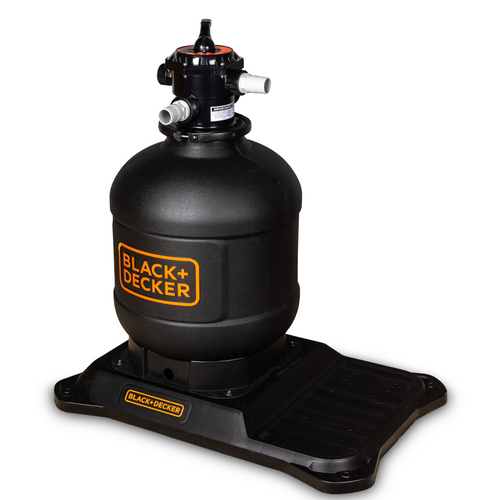
How Sand Filters Work
A sand filter contains 100-300 pounds of specially graded sand (typically #20 silica sand). As water flows through the sand bed, particles get trapped in the spaces between sand grains. Over time, these trapped particles actually improve filtration by creating finer pathways for water to flow through—a process called "ripening."
When the filter pressure increases (indicating the sand is getting clogged), you perform a backwash: reversing water flow to flush out accumulated debris. The whole process takes about 5 minutes.
Advantages of Sand Filters
Lowest maintenance requirements: Backwashing is quick and simple—just turn a valve and let it run. No disassembly, no cleaning individual components, no replacement media to buy for 5-7 years.
Exceptional durability: Quality sand filters can last 20+ years with proper care. The tank is typically fiberglass or polymer that resists corrosion and weather damage. Sand itself is incredibly durable media.
Forgiving of water chemistry issues: Sand filters tolerate imbalanced water chemistry better than cartridge filters, which can be damaged by prolonged pH imbalances or high sanitizer levels.
Lower operating pressure: Sand filters typically operate at lower pressure than cartridge filters, which can mean less strain on your pump and slightly lower energy costs.
Best for high-bather loads: Pools that see heavy use—think family pools with kids coming in and out all day—benefit from sand filters' ability to handle large debris loads without constant attention.
Disadvantages of Sand Filters
Larger footprint: Sand filters are bulky. You need adequate equipment pad space, and they can be challenging to fit in tight areas or smaller above-ground pool setups.
Coarser filtration: Sand filters trap particles down to about 20-40 microns. That's sufficient for clear water, but not as fine as cartridge or DE filters. You might notice slightly less "polish" to your water.
Water waste during backwashing: Each backwash uses 200-500 gallons of water. In drought-prone areas or where water is expensive, this adds up over a season.
Requires plumbing for backwash discharge: You need somewhere for backwash water to go—typically a drain, sewer connection, or designated yard area.
Heavier and harder to install: That 200+ pounds of sand makes installation and any future moves challenging. You'll likely need help or professional installation.
Best Use Cases for Sand Filters
Sand filters make the most sense when:
✓ You have adequate space on your equipment pad
✓ Low-maintenance operation is your top priority
✓ Your pool sees heavy use with multiple swimmers
✓ You have access to backwash drainage
✓ You prefer infrequent maintenance over regular cleaning
✓ Long-term durability matters more than finest filtration
✓ You have an inground pool with adequate circulation power

Cartridge Filters: The Convenience Champion
Cartridge filters have surged in popularity over the past two decades, and it's easy to see why—they eliminate backwashing and offer genuinely easy maintenance.
How Cartridge Filters Work
Cartridge filters use pleated fabric (typically polyester) cartridges that look somewhat like oversized air filters. Water flows through the pleated material, which traps particles on its surface. Multiple pleats create substantial surface area in a compact filter, improving efficiency.
When the cartridge gets dirty (indicated by increased filter pressure), you remove it, spray it clean with a garden hose, and reinstall it. Cartridges typically last 1-3 years depending on use and water conditions before requiring replacement.
Advantages of Cartridge Filters
No backwashing required: This is the big draw. You save hundreds of gallons of water per month compared to sand filters. In areas with water restrictions or high costs, this matters significantly.
Finer filtration: Cartridge filters trap particles down to 10-15 microns, producing noticeably clearer, more polished water than sand filters. Your pool will have that pristine, resort-quality appearance.
Compact size: Cartridge filters have a much smaller footprint than sand filters, making them ideal for tight equipment areas or above-ground pool installations where space is limited.
Lower operating pressure: Many cartridge filters operate at lower pressure than sand filters, which can reduce pump energy consumption and extend pump life.
Easier installation: Without sand weight, cartridge filters are lighter and simpler to install. Many pool owners can handle installation themselves.
Better for variable-speed pumps: The lower pressure requirements make cartridge filters excellent partners for energy-efficient variable-speed pumps.
Disadvantages of Cartridge Filters
Regular hands-on cleaning required: Every 2-4 weeks during swimming season, you'll need to remove, spray clean, and reinstall cartridges. This takes 20-30 minutes and gets your hands dirty.
Cartridge replacement costs: Cartridges cost $40-80 each (or more for large filters), and you might have 2-4 cartridges in your filter. Replacement every 1-3 years adds to operating costs.
More sensitive to chemistry imbalances: High sanitizer levels, incorrect pH, or metal content can damage cartridge fabric, shortening lifespan. You need to stay on top of water chemistry.
Periodic deep cleaning required: Beyond regular hosing, cartridges need quarterly chemical cleaning (soaking in filter cleaner) to remove oils, sunscreen, and embedded debris. This adds to maintenance requirements.
Can clog faster with heavy debris: While cartridge filters handle normal debris well, pools with heavy leaf fall or high swimmer loads may see more frequent pressure increases requiring cleaning.
Best Use Cases for Cartridge Filters
Cartridge filters make the most sense when:
✓ You want to conserve water and eliminate backwashing
✓ Equipment pad space is limited
✓ You prefer more frequent, but simpler maintenance
✓ You have an above-ground pool or smaller inground pool
✓ Water clarity and polish are priorities
✓ You're using a variable-speed pump
✓ You maintain good water chemistry consistently
✓ You're comfortable with hands-on maintenance every few weeks
DE Filters: The Water Quality Champion
DE (diatomaceous earth) filters represent the premium filtration option, offering the finest particle removal of any pool filter type.
How DE Filters Work
DE filters use grids coated with diatomaceous earth—a fine, white powder made from fossilized remains of tiny aquatic organisms called diatoms. This powder creates an incredibly fine filter media that traps particles as small as 2-5 microns.
The filter contains multiple grids inside a tank. After backwashing, you add fresh DE powder through the skimmer, which coats the grids and creates the filtration layer. When the filter pressure increases, you backwash to remove the old DE and debris, then add fresh DE powder.
Advantages of DE Filters
Finest filtration available: At 2-5 microns, DE filters provide the clearest, most polished water possible. If you're seeking absolute water quality perfection, nothing beats DE filtration.
Efficient debris handling: Despite fine filtration, DE filters handle reasonable debris loads well. The grid design provides substantial surface area.
Can be "bumped" to extend cycles: Many DE filters feature a "bump" mechanism that dislodges caked-on DE, allowing extended operation between full backwash cycles.
Less frequent backwashing than sand: While you do need to backwash, it's typically less frequent than sand filters in comparable conditions.
Disadvantages of DE Filters
Most complex maintenance: DE filters require the most hands-on maintenance. You're backwashing, adding DE powder, occasionally disassembling for grid cleaning, and managing a consumable powder product.
Ongoing DE powder costs: You'll spend $30-60 per year on DE powder, depending on how often you backwash. This is an ongoing operating expense.
Messy operation: DE powder is fine and can be messy to handle. Some people are sensitive to the dust, requiring masks during application.
Backwash disposal concerns: Unlike sand filters, you can't always discharge DE-laden backwash anywhere. Many municipalities restrict DE disposal due to environmental concerns. You may need special disposal arrangements.
Most expensive initial investment: DE filters typically cost more upfront than comparable sand or cartridge filters.
Grid replacement costs: Over time, DE filter grids wear out and require replacement. This can be a significant expense every 5-10 years.
Best Use Cases for DE Filters
DE filters make the most sense when:
✓ Water clarity perfection is your top priority
✓ You're willing to invest time in maintenance for superior results
✓ You have experience with pool maintenance or are eager to learn
✓ Your municipality allows DE backwash discharge
✓ You're not deterred by ongoing consumable costs
✓ You have an inground pool and appreciate premium equipment
✓ You're comfortable with more complex maintenance procedures
Featured Products: Our Top Filter Recommendations
Based on thousands of customer installations and feedback, these BLACK+DECKER filters deliver exceptional performance and reliability:
For Above-Ground Pools: Cartridge Excellence
The BLACK+DECKER 1200 Series Cartridge Filter at $299.99 provides powerful filtration in a compact package perfect for above-ground pools.
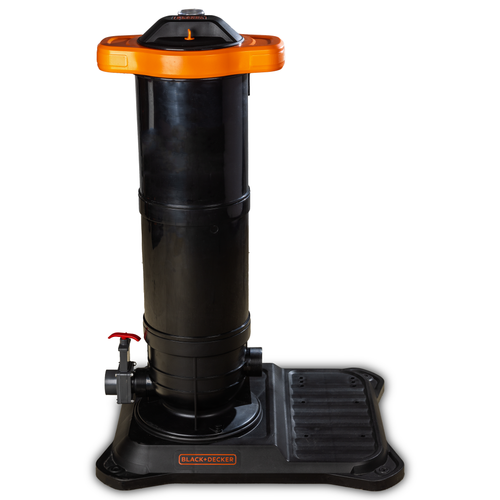
Why this model stands out:
-
Optimized for above-ground pool circulation requirements
-
1200 series capacity handles pools up to 18,000 gallons efficiently
-
Easy cartridge access for routine cleaning—no tools required
-
Compact footprint fits tight equipment areas
-
No backwashing saves water and simplifies operation
-
Trusted BLACK+DECKER quality at an accessible price point
Best for: Above-ground pool owners wanting excellent water clarity without complex maintenance, first-time pool owners, and those with limited equipment space.
For Larger Above-Ground Installations
The BLACK+DECKER 900 Series Cartridge Filter at $359.99 steps up capacity for larger above-ground pools or those demanding superior filtration.
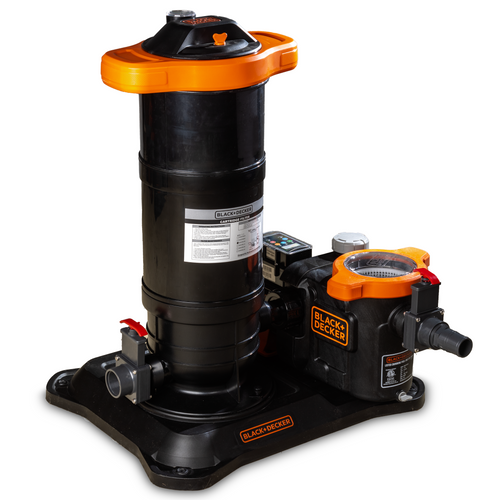
Why this model stands out:
-
Enhanced 900 series capacity accommodates larger above-ground pools and heavy use
-
Superior filtration quality for crystal-clear water
-
Durable construction withstands seasons of outdoor exposure
-
Easy maintenance schedule fits busy lifestyles
-
Energy-efficient operation pairs perfectly with modern pumps
-
Clean, simple operation with no backwash requirements
Best for: Large above-ground pools (24-foot diameter and up), pools with heavy bather loads, and owners prioritizing exceptional water quality.
For Inground Pools: Proven Sand Technology
The BLACK+DECKER Sand Filter Tank With 2" 6-Way Valve and Pedestal Base at $639.99 delivers traditional sand filtration reliability with modern features.
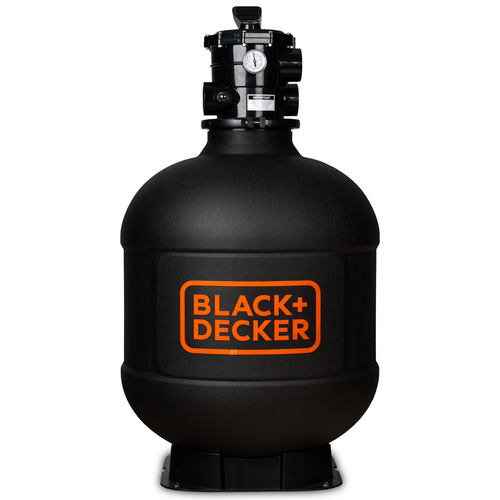
Why this model stands out:
-
Professional-grade sand tank construction for inground and larger above-ground pools
-
6-way valve provides complete control: filter, backwash, rinse, recirculate, waste, closed
-
Pedestal base elevates tank for easier valve access and plumbing connections
-
Durable tank withstands years of outdoor exposure and harsh conditions
-
2-inch plumbing accommodates higher flow rates for efficient circulation
-
Low-maintenance operation—just backwash when pressure increases
Best for: Inground pool owners wanting proven, low-maintenance filtration technology, pools with heavy use, and installations where equipment longevity matters most.
For Premium Inground Installations
The BLACK+DECKER 525 Quad Filter Tank at $1,159.99 represents the pinnacle of inground pool filtration.
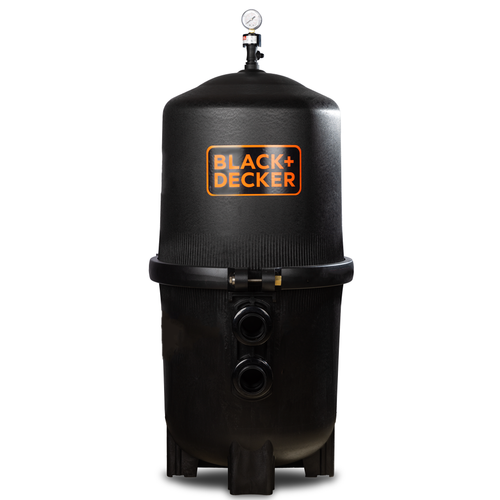
Why this model stands out:
-
Quad cartridge design provides massive filtration surface area
-
Handles large inground pools up to 30,000+ gallons with ease
-
Four individual cartridges distribute debris load for extended cleaning cycles
-
Superior water clarity rivals DE filtration without the complexity
-
No backwashing conserves water while delivering premium performance
-
Professional-grade construction ensures decades of reliable service
-
Easy cartridge access simplifies maintenance despite large capacity
Best for: Large inground pools, pool owners demanding absolute water quality, installations where water conservation matters, and premium pool builds deserving premium equipment.
Installation and Space Considerations
Physical Footprint Comparison
Sand filters require the most space due to their large tank diameter. Plan for at least 24-30 inches of clearance around the tank for valve operation and potential servicing.
Cartridge filters are the most compact option, often half the footprint of comparable sand filters. This makes them ideal for tight equipment areas or above-ground pool installations where space is limited.
DE filters fall somewhere between sand and cartridge filters in size, though their grid design can make them taller. Plan for adequate vertical clearance.
Plumbing Requirements
All three filter types require similar plumbing connections: inlet from pump, outlet to pool, and drain/waste connection. However:
-
Sand and DE filters need proper backwash drainage—either to sewer, dedicated drain, or appropriate yard area
-
Cartridge filters eliminate backwash plumbing, simplifying installation considerably
Accessibility Matters
Consider how easy it is to access your filter for maintenance:
-
Will you need to remove cartridges regularly? Ensure adequate workspace.
-
Can you easily turn a backwash valve and monitor backwash flow?
-
Is there room to add DE powder through the skimmer without awkward reaches?
Ongoing Cost Comparison: The 5-Year View
Let's look beyond purchase price to understand true ownership costs over five years:
Sand Filter 5-Year Costs
-
Initial purchase: $400-$800
-
Sand replacement (Year 5): $40-$80
-
Backwash water: ~200 gallons × 20 backwashes/year × $3-5/1000 gallons × 5 years = $60-$100
-
Total 5-year cost: $500-$980
Cartridge Filter 5-Year Costs
-
Initial purchase: $300-$1,200
-
Cartridge replacements: $80-$200 every 1-3 years × 2-3 replacements = $160-$600
-
Filter cleaner: $15 × 5 years = $75
-
Total 5-year cost: $535-$1,875
DE Filter 5-Year Costs
-
Initial purchase: $600-$1,500
-
DE powder: $40-$60/year × 5 years = $200-$300
-
Grid replacement (if needed): $150-$300
-
Backwash water: Similar to sand, $60-$100
-
Total 5-year cost: $1,010-$2,200
The takeaway: Sand filters offer the lowest long-term costs, cartridge filters are moderate, and DE filters are premium both upfront and ongoing. However, these costs pale in comparison to your overall pool maintenance budget—choose based on what works best for your situation, not just price.
Making Your Final Decision
Let's make this practical with a simple decision framework:
Choose a Sand Filter If:
✓ You have adequate space for a larger filter tank
✓ Minimal hands-on maintenance is your priority
✓ You don't mind backwashing and have drainage available
✓ Your pool sees heavy use with many swimmers
✓ Long-term durability and lowest costs matter most
✓ You have an inground pool with standard circulation
✓ Good water clarity is sufficient (you're not seeking perfection)
Our recommendation: The BLACK+DECKER Sand Filter Tank With 2" 6-Way Valve and Pedestal Base at $639.99 delivers proven sand filtration with professional features.
Choose a Cartridge Filter If:
✓ You want to eliminate backwashing and conserve water
✓ Space is limited on your equipment pad
✓ You prefer more frequent but simpler maintenance
✓ Excellent water clarity is important to you
✓ You have an above-ground pool or smaller inground pool
✓ You're using or planning to use a variable-speed pump
✓ You maintain consistent water chemistry
Our recommendation: For above-ground pools, the BLACK+DECKER 1200 Series Cartridge Filter at $299.99 provides excellent value. For larger pools or premium installations, the BLACK+DECKER 525 Quad Filter Tank at $1,159.99 delivers exceptional performance.
Choose a DE Filter If:
✓ Water clarity perfection is your absolute priority
✓ You're comfortable with more complex maintenance
✓ You're willing to invest more upfront and ongoing
✓ Your municipality allows DE backwash disposal
✓ You have experience with pool equipment or want to learn
✓ You appreciate premium equipment and results
Your Path to Crystal-Clear Water
Choosing the right filter isn't about finding the objectively "best" technology—it's about matching filter characteristics to your specific needs, preferences, and pool situation. A sand filter that requires minimal attention might be perfect for a busy family, while a cartridge filter's water clarity could be ideal for someone who takes pride in maintaining a pristine pool.
The good news? All three technologies work. Your pool will be swimmable and enjoyable regardless of which filter type you choose. The key is selecting the option that fits your maintenance style, space constraints, and water quality expectations.
Ready to upgrade your pool's filtration? Browse our complete selection of sand, cartridge, and DE filters from trusted brands like BLACK+DECKER. And remember—we're here to help. If you have questions about sizing, compatibility with your existing equipment, or which filter type makes sense for your specific situation, our team is just a phone call or email away.
Start your journey to crystal-clear water today. Shop our pool filters and discover the difference proper filtration makes in your swimming experience.