There's nothing quite like relaxing by your pool on a warm summer evening—until the loud hum of your pool pump drowns out the conversation, the birds, and any sense of tranquility. If you've got a small backyard where your pool pump sits close to your patio, deck, or even your neighbor's fence, pump noise isn't just annoying; it can genuinely impact your quality of life.
We hear from pool owners all the time who say they avoid running their pump during evening gatherings or feel guilty about disturbing their neighbors. The good news? You don't have to choose between clean water and peace and quiet. Modern pool pump technology has come a long way, and today's quietest models deliver powerful performance without the ear-splitting noise of older single-speed pumps.
In this guide, we'll walk you through what makes a pool pump quiet, why it matters more in small spaces, and our top picks for whisper-quiet operation that won't compromise your pool's cleanliness.
Why Pump Noise Matters More in Small Backyards
In a sprawling backyard, you can position your pump equipment 40-50 feet away from entertaining areas. But in a compact space, that luxury doesn't exist. Your pump might be just 10-15 feet from your back door, outdoor dining area, or bedroom window—and your neighbor's space too.
The Small Backyard Challenge
Think about the acoustics of a small space. Sound doesn't have room to dissipate—it bounces off fences, walls, and hard surfaces, actually amplifying the noise. What might be a tolerable hum in an open yard becomes a constant droning presence in a cozy backyard setting.
Plus, municipal noise ordinances often restrict equipment noise levels, especially during evening hours. A loud pump can lead to neighbor complaints, strained relationships, or even fines in some communities.
What Pool Owners Tell Us
The most common complaint we hear? "I can't enjoy my backyard anymore." Pool owners find themselves:
-
Turning off the pump during dinner parties (compromising water quality)
-
Running the pump only during daytime hours (missing overnight filtration benefits)
-
Avoiding their backyard during pump operation
-
Dealing with tension from neighbors about the noise
The solution isn't running your pump less—it's choosing a quieter pump from the start.
What Makes a Pool Pump Quiet?
Before we dive into specific recommendations, let's talk about what actually creates pump noise and how manufacturers reduce it.
The Main Sources of Pump Noise
Motor Speed The faster a motor spins, the louder it runs. Single-speed pumps typically run at 3,450 RPM, which creates significant noise. Variable-speed and dual-speed pumps can operate at much lower speeds (1,500-2,000 RPM) while still providing adequate filtration.
Motor Quality and Design Cheaper motors with unbalanced rotors or lower-quality bearings create vibration and mechanical noise. Premium motors use precision-balanced components and sealed bearings that run smoother and quieter.
Pump Housing The pump housing (or volute) amplifies motor vibration. Higher-quality pumps use thicker, better-engineered housings that dampen vibration rather than resonating with it.
Installation Quality Even the quietest pump will be noisy if it's installed on a resonant surface or touching structures that amplify vibration. Proper installation pads and mounting techniques make a huge difference.
Decibel Levels Explained
To give you context for pump noise ratings:
-
Normal conversation: 60 dB
-
Typical single-speed pump: 65-75 dB
-
Quiet dual-speed pump (low setting): 45-55 dB
-
Premium variable-speed pump (low setting): 40-50 dB
-
Whisper or rustling leaves: 20-30 dB
The Goal: Look for pumps that operate at 60 dB or lower, ideally in the 45-55 dB range for truly peaceful operation.
The Variable-Speed Advantage
Before we get to specific models, we need to talk about why variable-speed pumps dominate the "quiet pump" category.
Why Variable-Speed Pumps Are Inherently Quieter
Variable-speed pumps use permanent magnet motors (similar to electric vehicles) that can run at any speed between roughly 600-3,450 RPM. This matters because pump noise increases exponentially with speed.
Here's the magic: most pools don't actually need high-speed operation except for special circumstances like vacuuming or operating a spa. For regular daily filtration, running at 1,500-2,000 RPM provides more than adequate flow while being dramatically quieter.
The Energy Bonus
As a bonus, variable-speed pumps use 50-90% less energy than single-speed pumps. We've seen pool owners cut their electricity bills from $800/year to under $200/year—which means the pump pays for itself within 2-3 seasons while being whisper-quiet.
Pro Tip: Program your variable-speed pump to run at lower speeds during evening hours when you're using your backyard, then increase speed overnight for more aggressive filtration when noise doesn't matter.
Top 5 Quietest Pool Pump Categories for Small Backyards
While we can't list every specific model here, we'll guide you through the types of pumps that consistently deliver the quietest performance. You can find excellent options in both our inground pool pumps and above ground pool pumps collections.
1. Variable-Speed Pumps with Smart Controls
Best For: Pool owners who want the absolute quietest operation with maximum control
Variable-speed pumps represent the gold standard for quiet operation. These sophisticated pumps allow you to program different speeds for different times of day, so you can run whisper-quiet during your prime backyard hours.
Key Features to Look For:
-
Permanent magnet motors (TEFC - Totally Enclosed Fan Cooled)
-
Digital controls with programmable timers
-
Multiple speed settings (typically 8 speeds)
-
Energy Star certification
-
Noise ratings of 45-55 dB at low speeds
Performance: On low speed, you'll barely hear these pumps running—seriously. Many pool owners report being able to hold conversations right next to the equipment pad without raising their voices. At higher speeds for vacuuming or backwashing, the noise increases but remains reasonable.
Typical Price Range: $600-$1,200
Browse our selection of variable-speed inground pumps to find models that fit your pool size and budget.
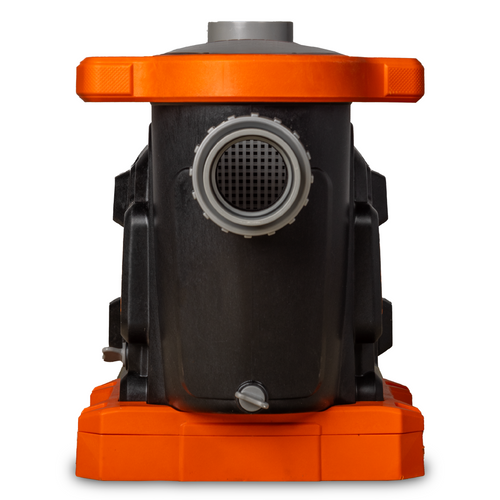
2. Premium Dual-Speed Pumps
Best For: Budget-conscious pool owners who still want significant noise reduction
Dual-speed pumps offer a practical middle ground. While they don't provide the infinite adjustability of variable-speed models, having two distinct speeds—high (3,450 RPM) and low (1,725 RPM)—gives you excellent flexibility.
Key Features to Look For:
-
High-efficiency motors with thermal protection
-
Heavy-duty construction to minimize vibration
-
Large, well-designed impellers for efficient water movement
-
Simple switching mechanism between speeds
Performance: On low speed, expect noise levels around 55-60 dB—noticeably quieter than single-speed pumps. You'll run low speed for 90% of your filtration needs, only switching to high speed for vacuuming or when you need to clear up cloudy water quickly.
Typical Price Range: $350-$600
Check out both our inground and above ground collections for dual-speed options.
3. Energy-Efficient Single-Speed Pumps (Modern Design)
Best For: Pools with simple systems where dual/variable speed isn't necessary
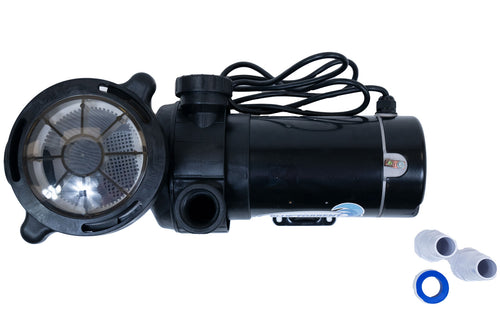
Not every pool needs a variable-speed pump. If you have a straightforward setup without heaters, water features, or automated systems, a well-designed modern single-speed pump can be surprisingly quiet—especially compared to older models.
Key Features to Look For:
-
Precision-balanced motors
-
Quality sealed bearings
-
Thick, engineered housings
-
Lower horsepower ratings (0.75-1.5 HP for most residential pools)
Performance: Modern single-speed pumps typically operate at 60-65 dB—quieter than older models but louder than dual-speed or variable-speed options. The key is choosing the right horsepower: an oversized pump works harder and louder than necessary.
Typical Price Range: $250-$450
4. Above Ground Pumps Designed for Quiet Operation
Best For: Above ground pool owners in compact spaces
Above ground pumps have an advantage: they're typically smaller and lower horsepower than inground models, which means less noise potential from the start. The best quiet models take this further with thoughtful engineering.
Key Features to Look For:
-
Two-speed operation for flexibility
-
Compact motor housings with sound-dampening design
-
Energy-efficient motors (even at single-speed)
-
Ratings of 1.5 HP or less for most residential pools
Performance: Quality above ground pumps typically operate at 55-65 dB, with dual-speed models dropping to 50-55 dB on low speed. Since above ground pools generally require less powerful pumps than inground pools, you naturally get quieter operation.
Typical Price Range: $200-$500
Explore our complete above ground pump collection for specific models with excellent noise profiles.
5. Pumps with Integrated Sound Enclosures
Best For: Pool owners who need maximum noise reduction regardless of cost
Some premium pumps come with factory-integrated sound enclosures or insulation, taking quiet operation to the next level. While less common in the residential market, these pumps deliver commercial-grade noise reduction.
Key Features to Look For:
-
Sound-dampening housings or enclosures
-
Vibration-isolating motor mounts
-
Variable-speed technology combined with acoustic design
-
Professional-grade construction
Performance: These represent the ultimate in quiet pool pumps, with noise levels that can drop below 45 dB at low speeds—comparable to a quiet library or soft background music.
Typical Price Range: $800-$1,500+
Additional Noise Reduction Strategies
Even with a quiet pump, proper installation and maintenance make a significant difference in actual noise levels.
Installation Best Practices
Use a Proper Pump Pad Never install directly on concrete or a deck. Use a heavy-duty rubber or composite pump pad that absorbs vibration rather than transmitting it to surfaces that act as soundboards.
Maintain Distance Position your equipment as far from living areas as practical, even if it's just an extra 5-10 feet.
Create Sound Barriers Strategic landscaping with dense shrubs or decorative screens can absorb and deflect pump noise away from gathering areas.
Ensure Proper Leveling An unlevel pump creates additional vibration. Use a level during installation and check periodically.
Maintenance for Quiet Operation
Keep Baskets Clean A clogged strainer basket forces your pump to work harder (and louder) to maintain flow.
Monitor for Air Leaks Air in the system creates cavitation—those loud gurgling, knocking sounds. Check all connections and lid O-rings regularly.
Lubricate as Recommended Follow manufacturer guidelines for motor bearing maintenance. Dry bearings create grinding noise.
Replace Worn Components Worn impellers or damaged diffusers increase vibration and noise. Replace these components before they damage the motor.
Making Your Decision: What to Consider
Choosing the quietest pump for your small backyard comes down to balancing several factors:
Pool Size and Volume
Your pump must still adequately filter your water. Calculate your pool volume and required flow rate before prioritizing quiet operation—there's no point having a quiet pump if your water stays cloudy.
Quick Formula: Pool gallons ÷ 8 hours = Required GPH (gallons per hour)
Usage Patterns
When do you use your backyard most? If you're primarily evening users, a variable-speed pump programmed for low-speed evening operation makes perfect sense. If you're rarely home during the day, you can run any pump at full speed while you're gone.
Budget vs. Long-Term Value
Variable-speed pumps cost more upfront but save dramatically on electricity. A $300 energy savings per year means a $700 pump upgrade pays for itself in under 3 seasons—while also being quieter.
Features and Attachments
If you have water features, heaters, or automated cleaning systems, you'll need a more powerful pump that can handle multiple functions. Look for variable-speed models that let you program different speeds for different features.

Common Questions About Quiet Pool Pumps
Will a quieter pump clean my pool as well? Absolutely. Modern quiet pumps are actually more effective because they run longer at lower speeds, providing better filtration than short bursts of high-speed operation.
Can I retrofit a sound enclosure on my existing pump? Yes, aftermarket pump boxes with sound insulation are available. However, ensure adequate ventilation—motors need airflow to prevent overheating.
How much can a quiet pump really reduce noise? Switching from an old single-speed to a modern variable-speed can reduce perceived noise by 50-70% during regular operation. That's the difference between having to raise your voice and barely noticing the pump is on.
Do quiet pumps cost more to maintain? Not necessarily. Variable-speed pumps actually tend to last longer because they spend most of their time running at lower speeds, reducing wear on components.
Ready for a Quieter Backyard?
You shouldn't have to choose between a clean pool and a peaceful outdoor space. With today's pump technology, you can have both—crystal-clear water and conversation-friendly quiet operation.
The key is choosing the right pump for your specific situation: your pool type and size, your budget, and your lifestyle. Whether you opt for a premium variable-speed model or a well-engineered dual-speed pump, you'll be amazed at how much more enjoyable your backyard becomes without the constant drone of an old, noisy pump.
Ready to explore your options? Browse our complete selections of inground pool pumps and above ground pool pumps. Have questions about which pump is right for your small backyard? Our team is here to help you find the perfect balance of quiet operation and powerful performance.
Your peaceful backyard oasis is just one pump upgrade away.